 Free Returns on all orders.
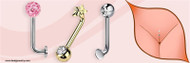
Let’s skip the copy-paste info and get real. If you’ve heard of a Christina piercing and you're thinking about getting one — or just curious what the deal is — this is for you. No overhyped claims or fluffy language. Just real talk.
First Off, What Is It?
The Christina piercing sits at the top of the vulva — right where the outer labia meet at the pubic mound. It goes vertically through the skin above the clitoral hood. And no, it doesn’t enhance sensation. It's more about aesthetics. Think of it as jewelry for a part of your body that’s personal — not always seen, but powerful to have.
It’s a surface piercing, which means it goes through flat skin, not a natural fold like your earlobe or nostril. That makes it a bit more complex when it comes to healing and rejection.
Is It New? Sort of.
This isn’t some ancient ritual piercing passed down for generations. The Christina piercing started showing up in the 1990s and got its name from the first woman who requested it — yep, her name was Christina. It gained a quiet kind of popularity among people who wanted something unique and personal, not flashy or public.
Even though it’s not old-school like nose or ear piercings, it has that same spirit of self-expression. You’re not getting it because everyone else has one — you’re getting it because you want it.
The Upsides
- It looks damn good — when it suits your anatomy and the jewelry fits right, it’s a beautiful piercing.
- It’s private — most people will never know it’s there, and that makes it feel even more personal.
- It gives you something for you — a bit of body confidence, a secret sparkle.
The Downsides (Yeah, Let’s Be Honest)
- Not everyone’s anatomy works for it. You need enough soft tissue at the top of the vulva, and a natural crease or fold. If your piercer says it won’t work, believe them. It’s not about looks — it’s about how your body is built.
- Healing takes time. It’s not a "good to go in 2 weeks" kind of piercing. Think 6 to 12 months, depending on how your body responds.
- Surface piercings can reject. If the jewelry isn’t fitted properly, or if there’s too much movement or pressure, your body might try to push it out.
- It’s sensitive to clothing and friction. Tight jeans or lace underwear? Probably not your friend for a while.
Healing Tips That Aren’t Overcomplicated
- Rinse gently with sterile saline, morning and night.
- No tugging, twisting, or over-cleaning — your body needs time, not trauma.
- Wear loose, soft fabrics. Think cotton, not anything that digs in.
- Keep an eye on it, but don’t obsess. If you see redness that doesn’t go away, swelling, or pain, go back to your piercer.
Jewelry That Works
Most Christina piercings are done with a curved barbell, sometimes a surface bar depending on how you’re shaped. If you're just healing, simple is better — no big gems or bulky ends.
Once you're fully healed, you can go for something like a bezel-set CZ, which gives you a smooth, low-profile shine that won’t snag. Always choose high-quality materials — implant-grade titanium or 316L surgical steel are your best bet.
That depends on you. If you’ve got the anatomy, you’re ready for the healing commitment, and you want a piercing that’s just for you — go for it. But do it because you want to, not for a trend or a partner or anyone else.
Some people love it and keep it for years. Others remove it after a while, and that’s fine too. Either way, you’ll walk away with a new connection to your body.