 Free Returns on all orders.
Getting a belly button piercing is exciting — and the moment you start eyeing new jewelry, the big question hits: when is it actually safe to switch it out? Changing your belly ring too early is one of the most common reasons people end up with irritation, rejection, or infection. This guide covers exactly how long to wait, how to tell your piercing is ready, and how to make the swap without setting yourself back.
How Long Does a Belly Button Piercing Take to Heal?
A navel piercing takes longer to heal than most people expect. The general timeline:
- Surface healed (looks fine): 3 to 4 months
- Safe to consider a first change: 6 months minimum for most people
- Fully healed through all layers: 9 to 12 months
The tricky part is that a belly piercing can look completely healed on the outside while still being raw underneath. This is why so many people change their ring at 6 to 8 weeks, run into problems, and assume they got a bad piercing — when really, they just swapped too soon.
Factors that slow healing include tight waistbands rubbing the area, sleeping on your stomach, swimming in pools or oceans before healing is complete, and any health conditions that affect how your body heals.
Signs Your Belly Piercing Is Actually Ready
Don't go by the calendar alone. Before you change your belly ring, check for all of these:
- No discharge — a healed piercing should have no fluid, crust, or discharge at all.
- No tenderness — press gently around the site; it should not be sensitive.
- No redness or swelling — the skin around the piercing should look the same as the skin beside it.
- The jewelry moves freely — a healed fistula lets the bar slide without resistance or pinching.
- No itching — some itching is normal during healing, but it should be completely gone before you change anything.
If any of these signs are still present, give it more time. Even one is enough reason to wait another few weeks.
What Happens If You Change It Too Early?
Changing a belly ring before your piercing is healed can cause:
- Irritation bumps — small, fluid-filled bumps that form when tissue is disturbed. They can take weeks to clear up.
- Migration — the body pushes the jewelry toward the surface of the skin. Early changes make this far more likely.
- Infection — an open healing channel gives bacteria a direct route in. New jewelry surfaces and pressure add to the risk.
- Rejection — the body treats the jewelry as a foreign object and works to expel it. Once rejection begins, it is very hard to stop.
None of these are permanent if caught early — but they are all avoidable by simply waiting.
How To Change Your Belly Button Ring (Step by Step)
Once you are confident your piercing is healed, here is how to swap it safely.
What you will need:
- Clean hands (wash with soap for at least 20 seconds)
- Your new belly ring — confirm it is 14G, the standard gauge
- A mirror with good lighting
- Saline spray or sterile wound wash
Step 1 — Sterilize your new jewelry. Even brand-new jewelry should be cleaned before it goes in. Spray with saline and pat dry with a clean paper towel — not cloth, which can harbor bacteria.
Step 2 — Wash your hands thoroughly. Not optional. Your hands carry bacteria that can cause problems even in a fully healed piercing.
Step 3 — Get comfortable. Sit in front of a mirror with good lighting. Lying down makes the skin bunch and removal harder.
Step 4 — Remove the current jewelry slowly. Hold the bottom bar steady with one hand and unscrew the top ball counterclockwise. Slide the bar down and out through the bottom of the piercing.
Step 5 — Insert the new jewelry. Slide the new bar in from the bottom hole upward. Screw the top ball on clockwise until snug — not tight. You should be able to rotate the jewelry freely when it is seated correctly.
Step 6 — Clean the area. Give the piercing a quick spray of saline after the swap to clear anything introduced during the change.
Choosing the Right Replacement Belly Ring
Your first swap matters — the jewelry you choose affects how your skin responds.
- Stick with 14G. Going thinner risks the cheese-cutter effect, where jewelry slowly migrates through the skin over time.
- Choose the right material. Implant-grade titanium or solid 14k gold are the safest first-change options — both are nickel-free and biocompatible. 316L surgical steel works well for healed piercings. Avoid plated metals or acrylic.
- Get the length right. Standard bar length is 10mm for most healed piercings. If your initial jewelry was 12 to 14mm to allow for swelling, you can size down once healed.
- Start simple. Curved barbells are the safest first-swap choice. Save heavy dangles for after your fistula has settled with the new jewelry.
Can You Do It Yourself?
Yes — once fully healed, most people handle their own belly ring changes without issues. If you are nervous, ask your piercer to do the first swap and walk you through the process.
If you feel resistance, pinching, or pain while inserting new jewelry, stop. Forcing it can create micro-tears. If the bar is not sliding in easily, give the piercing a bit more time or check that the new piece matches your gauge exactly.
What About Pregnancy Belly Rings?
As your belly grows, rigid jewelry becomes uncomfortable and can cause pressure sores as the skin stretches. Flexible PTFE (bioplast) pregnancy belly rings are designed for this — soft, lightweight, and trimmable to fit as your body changes. Most piercers recommend switching by the second trimester.
Quick Reference: Belly Ring Change Timeline
- Fresh piercing (0–3 months) — Do not touch it. Keep cleaning.
- Looks healed (3–6 months) — Still wait. Surface heals before the inside.
- First safe change (6 months, all signs clear) — Swap carefully with safe material.
- Fully healed (9–12 months) — Any style or material is fine.
Waiting is genuinely the hardest part of having a belly piercing. But getting the timing right on your first change makes everything after it easier — you will have a stable, healthy fistula that lets you swap jewelry quickly and confidently.
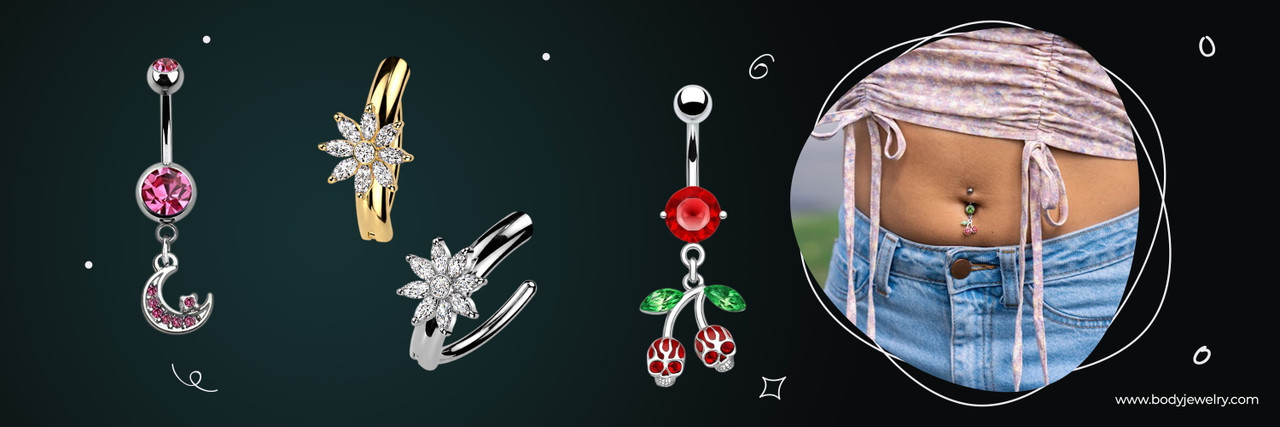
When you are ready to find your next belly ring, BodyJewelry.com has options in surgical steel, titanium, and solid 14k gold across every style — from simple curved barbells to dangle and reverse belly rings.