 Free Returns on all orders.

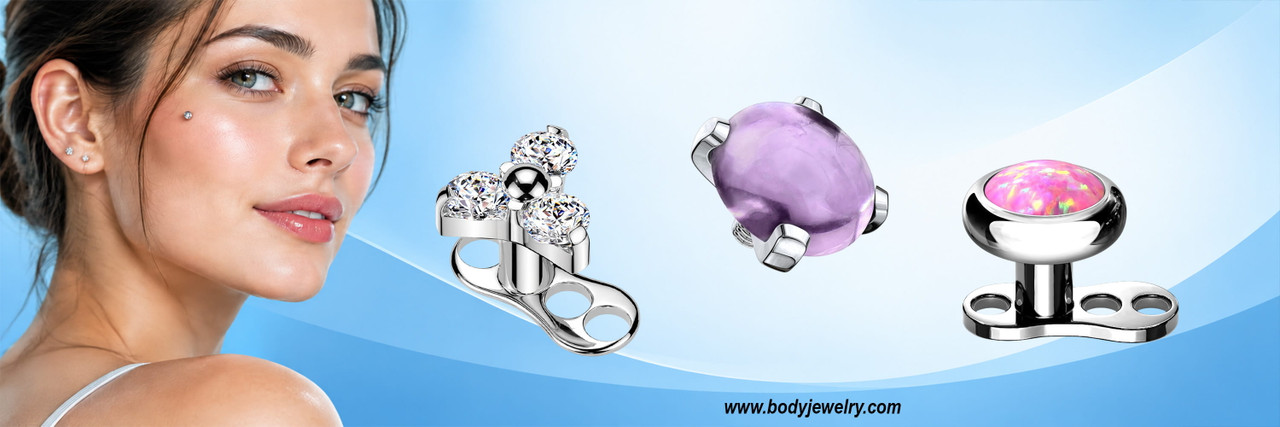
Everyday Dermal Jewelry: Risks, Myths, and Real Talk
Dermal jewelry looks amazing, and more people are choosing it for daily style, not just special nights out. Fall outfits, back-to-school looks, and holiday parties are all perfect times to add a little sparkle to skin, not just ears and noses. With that rise in interest comes a lot of drama online about safety.
We see the same claims repeated over and over: dermals always reject, they are never safe for work, they are only short term. The truth is more-nuanced. With good placement, smart jewelry choices, and real aftercare, many people wear dermals comfortably day in and day out. Our goal is to clear up common myths so you can decide what works for your body and your lifestyle.
What Dermal Jewelry Really Is and How It Heals
First, let us clear up what dermal jewelry actually is. A dermal anchor, sometimes called a microdermal or surface anchor, is a small base that sits under the skin. Only one end shows on the surface, where you screw on a decorative top. This is different from a traditional piercing that has an entry and exit hole, like a barbell through an ear.
Surface anchors are often grouped with dermals, but they can use different base shapes or bars. The main idea is the same, though: a flat base under the skin with a single visible point on top. That is what gives dermals their clean, floating look.
Healing happens in stages:
- Early healing, when the area is tender, swollen, and more prone to snagging
- Ongoing stabilization, when the skin slowly tightens around the base
- Long term, when it feels more like part of your body, but still needs respect
This timing matters if you want new dermals ready for fall festivals or winter parties. Getting pierced right before a big event can be stressful if the area is still fresh. A professional piercer will talk about placement, your job, clothing layers, and hobbies. Those factors have a huge impact on long-term success and do much more than the old myth that dermals are simply “doomed to fail.”
Myth vs. Reality: Is Dermal Jewelry Unsafe for Daily Life
A common myth says dermals always get ripped out. In real life, what usually happens is snagging. Sweaters, scarves, beanies, and even headphones can catch on a dermal that sits in a high-friction spot. When that happens over and over, the skin gets irritated and may start to migrate.
Another myth is that dermals always get infected or “poison” the skin. Infection typically comes from poor hygiene, dirty hands, or low-quality jewelry metals that upset the skin. When you choose safe materials and keep things clean, you reduce that risk a lot.
Realistic risks include:
- Snagging on clothes, especially tight fall tops, hoodies, and chunky knits
- Impact in contact sports or rough play
- Rubbing from backpack straps, bras, waistbands, or belts
- Pressure when sleeping on the piercing every night
Professional standards make a big difference. A skilled piercer uses sterile tools, proper jewelry, and smart angles so the base sits well in the tissue. Good aftercare habits, like not twisting the top or touching it with dirty hands, also shift dermals from “constant hazard” to “manageable body mod” for daily life.
Materials, Quality, and Placement That Really Matter
If you want dermals for everyday wear, quality materials are non-negotiable. Safer options often include implant grade titanium, high-quality stainless steel, solid gold, and other well known biocompatible metals. Cheap, mystery metal can cause:
- Itching and rashes
- Green or dark discoloration on skin
- Extra swelling or bumps
- Long-term sensitivity
Jewelry design also plays a big role. Low profile tops are usually better for daily wear because they do not snag as easily on clothing or hair. Flat discs, smooth gems, or tiny shapes tend to glide under shirts and scarves more easily than tall spikes or large prongs.
Placement is just as important as the metal itself. Many people have better luck with dermals in areas like:
- Upper cheekbone or along the side of the face
- Chest or neckline
- Hips or lower back, away from waistbands
- Parts of the torso that are not under tight straps
High impact or high friction areas, such as places that see constant waistbands, sports bras, or heavy backpack straps, are more challenging. A pro piercer will study your anatomy and ask questions about your daily routine before suggesting where to put a dermal.
Everyday Wear Myths: Work, Sports, and Seasons
Another huge belief is that dermal jewelry is never professional. The truth is, it depends on your workplace and the placement. A tiny, subtle dermal along the collarbone might be easy to cover with a scarf or top. A dermal on the face might be more visible in customer service roles. Sometimes it helps to:
- Read your company dress code
- Ask HR or a manager about visible piercings
- Choose placements that can be hidden when needed
For sports and active lifestyles, dermals can work with some activities, like yoga, dance, walking, or weight training with controlled movement. Contact sports, rough play, or anything with tight gear pressing on the area are bigger risks. Wrapping or padding may help a bit for non contact sports, but placement choices are still the foundation.
Seasonal shifts matter too. In fall and winter, we see more:
- Tighter layers that press on jewelry
- Thick scarves wrapping around the neck and chest
- Dry skin from cold air and indoor heating
All of that can make dermals feel more sensitive. Using soft fabrics over the area, taking your time when getting dressed, and keeping the skin moisturized around the piercing (but not smothered in heavy products) can reduce irritation.
Smart Aftercare Habits That Bust Infection Myths
Aftercare does not need to be complicated, but it does need to be consistent. For both healing and healed dermals, a simple routine might include:
- Gentle cleansing around the area with mild products approved by your piercer
- Patting dry with clean, disposable materials
- Avoiding heavy makeup or lotions directly over a fresh dermal
- Keeping hands off unless you are cleaning
Many people panic at the first sign of redness and assume rejection has started. Mild redness, a little warmth, or slight crusting can be normal, especially if you bumped the area or changed clothing styles. Signs to take more seriously include strong pain, thick discharge with odor, spreading heat, or jewelry that looks like it is sinking or moving.
In those cases, a pro piercer is often the first stop to assess the situation. They can tell the difference between normal irritation and migration that might need removal. A medical professional is the better choice if the area looks badly infected or you feel unwell. What we do not recommend is self removal, poking, or DIY fixes. Those are the habits that often turn small problems into bigger ones, especially during busy fall and holiday schedules when stress is already high.
Confident Next Steps for Choosing and Wearing Dermal Jewelry
The safest way to decide if dermal jewelry fits your life is to be honest about your routine. Think about your job, hobbies, clothing style, and how active you are during colder months. Then talk with a professional piercer about placement, timing, and realistic expectations for wear.
From there, you can plan a “dermal friendly” jewelry setup, starting with low profile tops in safe materials and upgrading your look as you get used to living with the piercing. Swapping in different dermal tops for fall and winter events can be a fun way to refresh your style while still staying practical. At BodyJewelry.com, we focus on offering a wide range of dermal pieces so you can pair what you learned here with quality options that support long-term, everyday wear instead of constant worry.
Upgrade Your Look With Confident, Long-Lasting Dermals
Ready to bring your next piercing idea to life with jewelry that looks amazing and stays secure? Explore our curated collection of high-quality dermal jewelry sized and styled for a comfortable, personalized fit. At BodyJewelry.com, home of Luxe Modz, we focus on pieces that match your aesthetic while supporting healthy healing and long-term wear. If you have questions about sizing, materials, or care, simply contact us and we will help you choose the right setup for your skin and style.