 Free Returns on all orders.
What Is a Daith Piercing, and Why Do People Try It for Migraines?
A daith piercing sits in the small, innermost fold of cartilage in your ear, just above the ear canal. Because the cartilage there is thick and curved, it is a more advanced piercing that should be done with a needle by a professional piercer, not a piercing gun. Healing can take several months, and during that time the piercing jewelry usually needs to stay in place without being removed.
So how did daith piercing and migraines become a topic people talk about so much? A lot of the attention comes from social media posts, migraine support groups, and word of mouth in the piercing community. Some people say their migraines improved after getting their daith pierced, and those personal stories spread quickly.
In this article, we want to sort through the hype. We will cover what people claim, what science actually says, and how to approach this piercing safely if you are interested for style, for possible migraine relief, or both.
How Daith Piercing Migraine Claims Compare to the Science
If you have spent any time in migraine forums, you have probably seen mixed experiences. Some people say their migraines became less frequent or less intense after a daith piercing. Others notice no difference at all, or they feel better for a short time and then symptoms return.
One popular theory is that the daith area lines up with acupuncture or acupressure points in the ear that are sometimes targeted for headache relief. The idea is that a piece of piercing jewelry might create gentle, constant pressure on that point, which could affect the nervous system and pain pathways. It sounds appealing, especially if you are already open to alternative therapies.
The challenge is that research on daith piercing for migraines is still very limited. There are small reports and individual stories, but no large, high-quality clinical trials proving that this piercing is an effective medical treatment. Many neurologists and headache specialists currently see daith piercing as unproven for migraine relief, not as a standard therapy like prescribed medications or nerve blocks. That does not mean it never helps anyone, but it does mean we cannot call it a reliable medical treatment.
Potential Benefits and Realistic Expectations for Migraine Sufferers
Even if the medical evidence is not strong, there can still be reasons someone with migraines chooses a daith piercing. One is the placebo effect. In simple terms, this is when you expect something to help, and that expectation alone can lead to real changes in how you feel. Your brain and body are deeply connected, so feeling hopeful and focused on a new solution can actually shift your experience of pain.
There are also emotional and personal benefits that have nothing to do with medical outcomes. A daith piercing can feel like a way to reclaim a sense of control when migraines have been calling the shots for a long time. On top of that, it is a distinctive, stylish piercing that many people genuinely love for its look. Choosing a piece of piercing jewelry that fits your taste can boost your mood and confidence.
We encourage you to think of a daith piercing as a style decision first, with any migraine improvement being a possible bonus. It should not replace medical care, prescribed treatments, or guidance from a headache specialist. If you go into the process with realistic expectations, you are less likely to feel disappointed, and more likely to appreciate the piercing for what it absolutely can offer: self-expression.
Risks, Pain, and Healing Considerations for a Daith Piercing
A daith piercing is usually more intense than a standard lobe piercing, because it goes through thick cartilage and sits in a tight spot. During the procedure, your piercer will clean the ear, mark the placement, and use a sterile needle to create the piercing, then insert the jewelry. Many people describe the pain as sharp and quick, followed by a throbbing or pressure sensation.
Like any cartilage piercing, daith piercings come with risks. Some of the most common include:
- Infection or persistent redness and warmth
- Swelling or pressure that makes headphones or sleeping uncomfortable
- Cartilage bumps, keloids, or irritation from friction
- Prolonged healing if the piercing is bumped or twisted
- Problems when piercing jewelry is changed too early
Healing time can stretch over several months, and it is normal for the area to feel tender or slightly sore for a while. Good aftercare makes a big difference. That usually means cleaning the piercing gently with a saline solution, keeping hair and products away from the area, and avoiding sleeping directly on that side. If you notice spreading redness, severe pain, thick yellow discharge, or fever, it is important to consult a healthcare provider. For smaller concerns like irritation bumps or snug jewelry, your piercer is often the best first stop.
Choosing Safe Daith Piercing Jewelry and Working with Your Piercer
Because of where the daith sits, starter jewelry needs to be chosen carefully. Many professional piercers prefer implant grade titanium or surgical steel for initial piercings, since these materials are often well tolerated and less likely to trigger irritation for many people. Common starter shapes include captive bead rings and hinged segment rings, which can sit neatly in that curved inner fold.
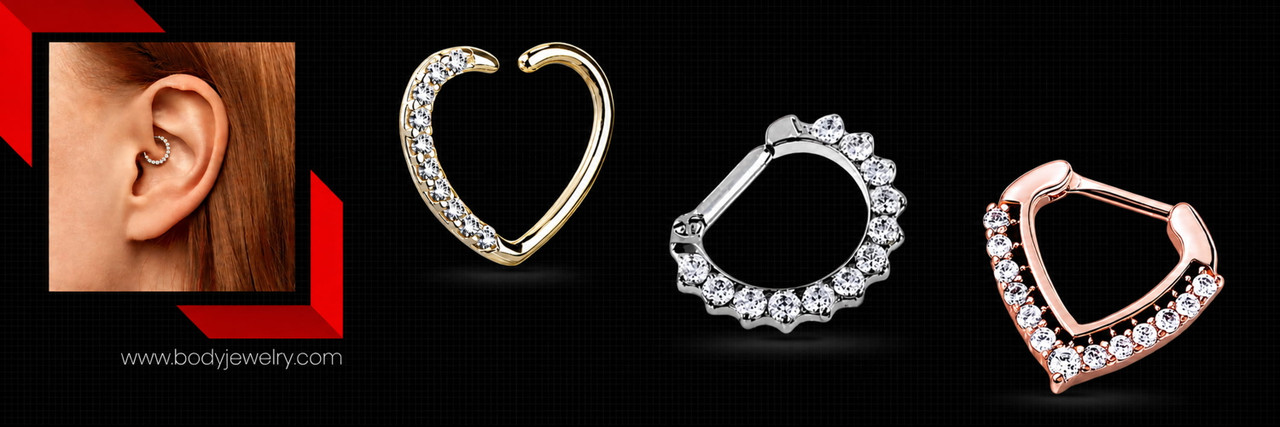
Comfort and fit matter a lot during healing. Jewelry that is too small can dig into the tissue as the ear swells, while pieces that are too large might snag on hair or headphones. Hypoallergenic metals and smooth designs can help reduce friction and give your piercing the best chance to heal cleanly. At BodyJewelry.com, we offer a wide variety of piercing jewelry for healed daith piercings, from minimalist rings to more decorative styles. Your piercer can guide you on when your piercing is ready for a change and what gauge and diameter you need.
Choosing the right piercer is just as important as picking the right jewelry. Before committing, many people like to:
- Look at the studio to see if it appears clean and organized
- Ask how often the piercer performs daith piercings
- Talk about their migraine history and what they hope for
- Discuss jewelry materials and aftercare in detail
- Make sure they feel comfortable asking questions
A skilled, experienced piercer helps lower the risk of complications and can set clear expectations around pain, healing, and outcomes.
Making an Informed Choice and Next Steps for Migraine Relief
When we put all of this together, the main takeaway is simple. Stories about daith piercing and migraines are mostly anecdotal, and current science has not confirmed daith as a reliable medical treatment. For most people, it is better to see this piercing as a form of self-expression that might, or might not, influence migraine patterns.
If you live with migraines, working closely with a healthcare provider or headache specialist is still the most dependable way to explore treatment options. A daith piercing can be one small piece of a much larger plan that might include medication, lifestyle changes, and other therapies. If you decide to get this piercing, take time to learn about aftercare, listen to your piercer’s guidance, and, once your piercing is fully healed, choose piercing jewelry that suits both your comfort and your style.
Upgrade Your Look With Confident, Safe Piercing Jewelry Choices
Explore our curated selection of piercing jewelry to find the perfect style, fit, and material for your next upgrade. At Body Jewelry, we focus on quality pieces that feel as good as they look so you can wear them every day with confidence. If you need help choosing sizes, metals, or designs, contact us and we will guide you step by step.