 Free Returns on all orders.

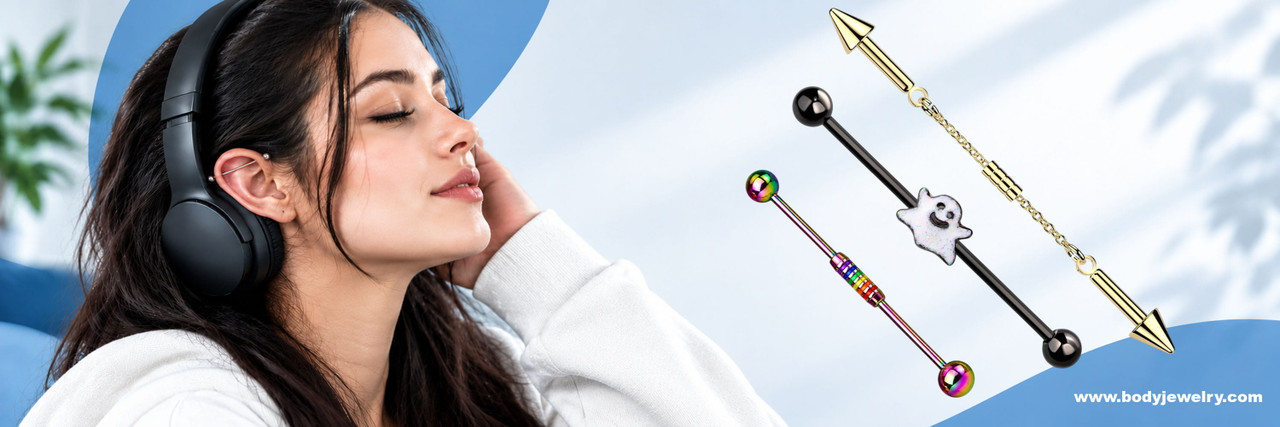
Start Listening Without Irritating Fresh Piercings
Industrial ear piercings can make headphones feel different, especially when the piercing is new. Because the bar runs across the upper cartilage, it may meet pressure from headphone bands, ear cups, snug hats, and even hoodie seams. That does not mean you have to give up music, calls, gaming, or podcasts. It simply means comfort needs to lead the way.
We recommend giving a fresh piercing plenty of room and handling it gently. A fully healed industrial piercing may work with more headphone styles, but every ear, barbell placement, and pair of headphones is different. Below, we’ll cover ways to choose a better style, adjust the fit, protect your jewelry, and keep everything cleaner during cool fall days.
Match Headphone Styles to Your Healing Stage
The right headphone style depends a lot on where your industrial barbell sits and how tender the area feels. In-ear earbuds often avoid direct contact with the upper ear, so they can be a more comfortable choice when an industrial piercing is healing. Still, they should be kept clean and used carefully.
Over-ear headphones can work for some people, but only if the ear cups are roomy enough and the band does not press the upper cartilage inward. On-ear headphones are more likely to create pressure because their pads sit directly against the ear. Bone-conduction and open-ear styles can also be useful because they may leave the upper ear more open.
For a new piercing, we suggest choosing the least restrictive option possible. You may want to use speakers for a while, listen on one side when appropriate, or save longer headphone sessions for later.
A few options to consider include:
- In-ear earbuds that do not touch the industrial bar
- Open-ear headphones that sit away from the upper cartilage
- Bone-conduction styles with a gentle fit
- Lightweight over-ear headphones with large, deep ear cups
- Speakers for long gaming sessions, work calls, or relaxing at home
Before making headphones part of your daily routine, follow the aftercare instructions from your professional piercer. If a style causes rubbing or soreness, it is not the right choice for that stage of healing.
Fit Industrial Ear Piercings Before Buying Headphones
Headphones that feel great on one person can be uncomfortable for someone else with industrial ear piercings. Ear shape matters, but so do the angle of the piercing, the placement of the barbell, and the length of the jewelry. Even a small difference in where a headphone band sits can change how much pressure reaches the upper ear.
Whenever possible, try headphones on before buying. Put them on slowly and pay attention to the area around the top of your ear. The headband should rest above the jewelry rather than pushing it down. Ear cups should leave enough space that the upper cartilage is not trapped against the side of your head.
Features that may make a difference include:
- Deep ear cups that give your ears more room
- Soft memory-foam cushions
- Flexible, adjustable headbands
- Lower clamping force, meaning less squeeze against your head
- Lightweight designs that are easier to wear for shorter sessions
We also recommend testing the fit while sitting, standing, and moving your head. A pair may feel fine for a minute but become uncomfortable once the cups shift. If you can feel the barbell pressing into cartilage right away, choose another style rather than trying to force the fit.
Adjust Over-Ear Headphones to Reduce Bar Pressure
If over-ear headphones are comfortable enough to wear, small adjustments can help keep them that way. Start by loosening the headband a little more than usual. A tight band can press the upper ear inward, which may push the industrial barbell against the cartilage.
Rather than placing the cups in the exact same spot every time, gently test a slightly lower or farther-back position. The goal is to create room around the piercing without making the headphones unstable. Put them on slowly so the band does not catch the jewelry.
We suggest this simple routine:
- Check that the barbell is sitting straight before putting headphones on
- Loosen the headband before settling the ear cups over your ears
- Shift the cups slightly if you feel pressure near the upper cartilage
- Take a break before discomfort begins
- Check the piercing area again after removing your headphones
Do not push through throbbing, warmth, swelling, or tenderness that sticks around after listening. Those signs can mean the headphones are rubbing or pressing too hard. A professional piercer can help you assess whether jewelry length, material, or placement may be adding to the problem.
Once healed, a properly fitted straight barbell in materials such as titanium, surgical steel, sterling silver, or solid gold can make everyday wear feel easier. Even then, comfort is still the best guide.
Keep Industrial Ear Piercings Clean During Fall Travel
Fall brings more time under hoodies, beanies, earmuffs, and over-ear headphones. Between commuting, road trips, indoor gaming, and cooler walks outside, the upper ear can face more friction than usual. Hats and hoods can also trap moisture around the piercing, especially after rain, exercise, or a warm ride on public transit.
Clean headphones matter just as much as a comfortable fit. Ear pads and earbuds can pick up sweat, makeup, hair products, and everyday grime. When they touch your ear, that buildup can transfer to the skin around your jewelry.
We recommend making headphone cleaning part of your regular routine, especially after workouts, long commutes, or sharing a device. Be sure to follow the cleaning guidance from the headphone maker so you do not damage the pads or electronics.
After showering or exercising, dry the area around your ear carefully. Try not to touch the jewelry repeatedly, and do not rotate the barbell. If a favorite beanie or hood presses against the piercing, switch to a looser option or use a listening style that stays away from the upper ear.
Build a Comfortable Listening Routine
A little flexibility can go a long way with industrial ear piercings. Rotate between earbuds, speakers, and open-ear options when you can. Short listening breaks give you a chance to notice whether your ear is becoming sore before irritation builds up.
Persistent discomfort is a sign that your setup may need adjustment. Reducing headphone pressure, maintaining proper jewelry fit, and following consistent aftercare can help protect the upper cartilage while the piercing heals.
Find Jewelry That Fits Your Style
At BodyJewelry.com, our Luxe Modz collection includes a full range of industrial barbells designed to complement your look. Browse options that let you refresh your jewelry collection with confidence. If you have questions about choosing a piece, contact us for helpful guidance.